From February 12 to December 3, 2026, Barcelona will experience an unprecedented celebration of architecture, urbanism, and landscape design with the world capital status granted by UNESCO-UIA. This time, however, it will not be confined to the city center: the ambition is to bring architecture to every neighborhood in the city.
The project is supported by three administrations—the Barcelona City Council, the Government of Catalonia, and the Spanish Ministry of Housing and Urban Agenda—and has been built from the ground up. After opening a call to citizens and civil society, 170 entities from Barcelona’s architectural, cultural, and educational fabric submitted proposals. The result? More than 200 projects that will translate into over 1,500 activities spread across the entire city.
The Canòdrom, the epicenter of Sant Andreu in October
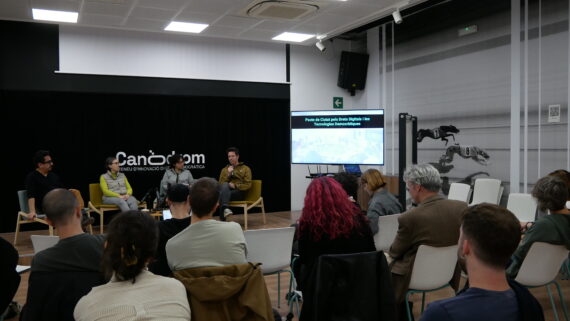
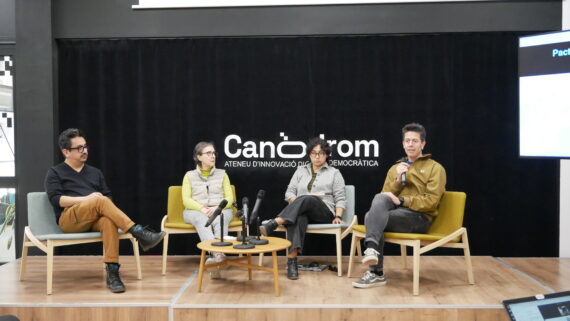
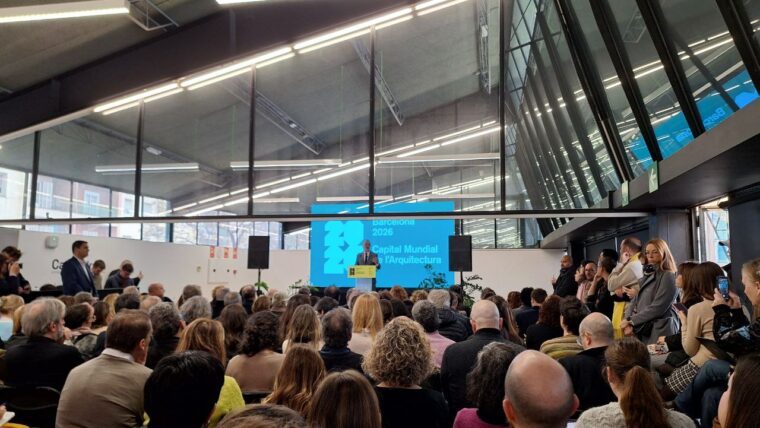
The key to the Capitality is decentralization. Instead of concentrating everything in the city center, each month one of Barcelona’s 10 districts will take center stage with its own venue. The Canòdrom will be the official venue for the Sant Andreu district during the month of October, something already made clear by the project’s press conference, which took place precisely here. The Capitality aims to be a neighborhood-rooted project that highlights the richness of Barcelona’s architectural heritage and the vitality of its local communities.
What will happen at the Canòdrom?
The venue will host a program that connects architecture, technology, and the climate crisis, very much in line with the essence of the space itself. These are some of the proposals:
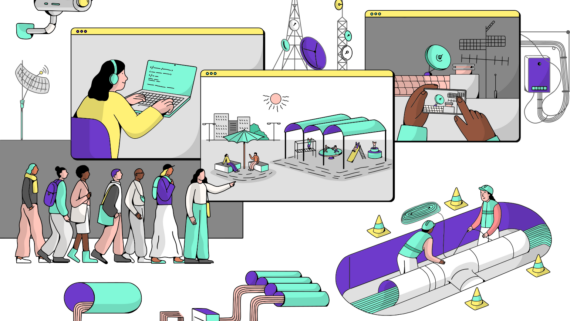
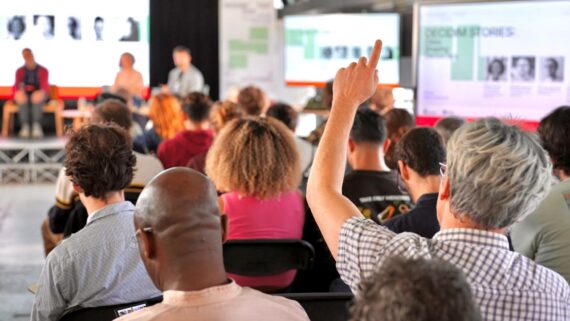
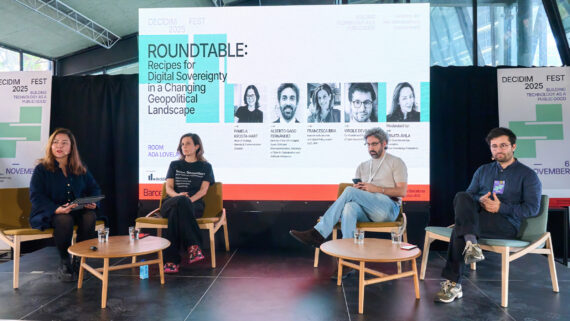
- RRReparem el futur cycle: throughout the year, the venue will host key activities from this cycle focused on urban infrastructures and the climate crisis. On February 19, the session “What lies beneath our feet?” will propose a debate with Gemma Barricarte, Radical Data, and elii on the city’s invisible infrastructures: from the tiles we walk on to the data generated every time we open an app. On March 21, the “Internet Tour” will take us on a walk around the Canòdrom to discover the physical infrastructures of the Internet that go unnoticed in the heart of the neighborhood: cables, boxes, data centers… with Mario Santamaría and Col·lectiu Punt6. The rest of the activities can be consulted on the cycle’s website.
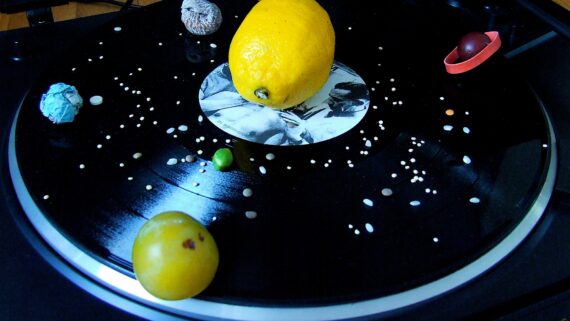
- “Balance of Chance” (February 6-8): As part of the Llum BCN 2026 festival, this installation welcomes World Capital to the Canòdrom itself. A work by Xavi Bové Studio that explores the movement between unpredictability and harmony. Through undulating forms that flow like currents, the piece reveals how chaos can be transformed into dynamic order. The synchronisation of the system is inspired by the Kuramoto model, where order arises from the continuous interaction between oscillating elements, without a pre-established form. It is a visual exploration that shows that, even in randomness, there is a balance that invites contemplation.
- “Moderns Without a Function” (March 5): a debate on the challenge of keeping 20th-century heritage alive, using the Canòdrom itself as an example of a building designed for a very specific use (a greyhound track!) that now hosts other functions. How can this heritage be protected while keeping it alive?
- A project by the Generació Futura Athenaeum which includes a screening of short audiovisual films about public space, made by university students, on the 16th and 17th of April. In addition, a photography exhibition opens on the building’s terraces on 15 April, which will remain open until 15 May.
- Exhibition and debate “From Party Walls to Facades” (October 19): a traveling exhibition on the project to remodel party walls across all city districts, featuring winning proposals from an international ideas competition. A way to reflect on how these anonymous walls can become publicly visible and how to intervene in them without losing urban cohesion.
- “Sound and Space” (October 1–30): a piano concert by Gerard Guerra, who will create a score based on the Canòdrom’s plans and perform it live. An exploration of architecture through sound, with the audience arranged 360° around the piano.
A kickoff packed with activities
February 12 will mark the official kickoff, but the program promises intensity throughout every month of 2026: 143 exhibitions, more than 500 routes and guided tours, 300 debates and conferences, 140 workshops for adults, and around sixty cultural activities. And as if that were not enough, 600 educational workshops for children and young people, ensuring that new generations also join the conversation about what we want the city of the future to be like. A capitality conceived as an opportunity to collectively rethink how we live in, inhabit, and transform our neighborhoods.