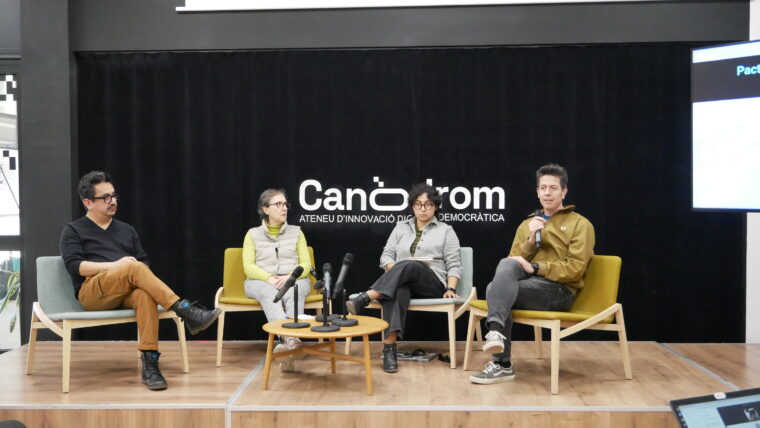
The process to create a City Pact for Digital Rights and Democratic Technologies is underway, an initiative that aims to lay the foundations for fair, equal and sustainable digitalisation.
This initiative, coordinated by the Technical Office of Canòdrom – Digital and Democratic Innovation Hub and the Directorate of Participation and Democratic Innovation Services, brings together various organizations that have been working on digital rights for years and now wants to open up to all citizens. A participation process has recently been launched on decidim.barcelona to collectively define what the city’s digitalization should look like: who has access to data, how artificial intelligence is used in public management, or how to strengthen the local technology ecosystem, among other issues.
A call for citizen participation
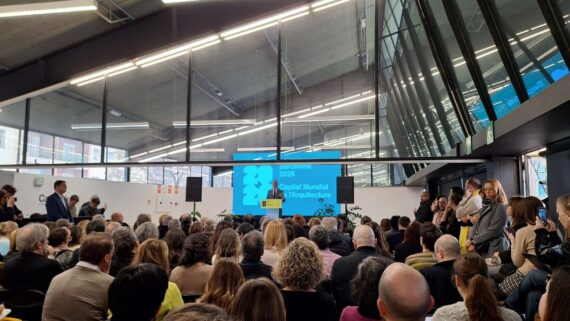
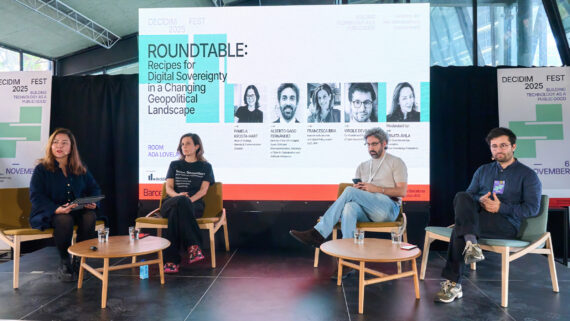
On November 6th, Canòdrom hosted the public presentation of the Pact’s draft, the result of collaborative work by people from organizations such as Colectic, la Fundació Ferrer i Guàrdia, l’Associació Decidim, Xnet, LaFede.cat, Dabne, eXO, Digicòria, UOC-TRÀNSIC, Digicòria, ArsGames, Tecnopolítica and La Colla de les Dades.
Now, the process opens up to the participation of all citizens so they can contribute their perspective before the final approval. The aim is for individuals, organizations, collectives and institutions to make their proposals, question the proposed commitments and help shape this collective agreement that seeks to involve all key actors in the city’s digitalization, from digital rights activists to technology sector professionals, including social organizations, cooperatives, neighborhood associations and anyone interested in how technology shapes urban life.
Nine commitments for a democratic digital city
The document is based on nine commitments that are open to discussion, comments, and amendments. The individuals, organisations, and institutions that ultimately sign the pact commit to promoting:
Technological autonomy and public infrastructures
Create public, public-community, and community digital infrastructures to break dependence on large tech corporations. The Pact proposes fostering low-consumption infrastructures and sharing resources with other cities facing similar technological needs.
Transparency and accountability
Establish stable participation spaces where citizens can understand and influence how technology is used by municipal bodies. These spaces must be open to individuals, communities, and organizations with real political influence.
Diverse and intersectional digitalization
Ensure the involvement of diverse local actors in the design and development of digital projects to prevent discriminatory biases from being reproduced or amplified in the city’s digital transformation.
Universal digital inclusion and literacy
Develop measures that address access, use, and benefit of digital technologies, ensuring institutional commitment to reducing socio-digital inequalities. The Pact also proposes guaranteeing the availability of data to evaluate the impact of municipal actions.
Strengthening the local technological ecosystem
Promote structural changes to reduce the precariousness of local technological initiatives and the social and solidarity economy, incorporating incentives to motivate tech professionals to engage in digital projects with positive social impact.
Free software and open source
Progressively incorporate clauses that promote the use of open-source code in municipal bodies and create a municipal Open Source Programme Office (OSPO) to act as a public reference for open-source-based projects.
Data sovereignty and open data
Promote shared governance frameworks that ensure individuals can access and control their digital information, avoiding invasive or extractive uses. At the same time, promote the opening of public administration data to facilitate transparency and citizen participation.
Fair and locally grounded artificial intelligence
Allocate public resources to create a citizen algorithmic audit in which municipal bodies must account for which artificial intelligences they use in municipal management, in what areas they apply them, and what environmental impact they generate.
Technological degrowth and redistribution
Promote technological degrowth with a focus on sustainability, democracy, and the common good, ensuring the redistribution of existing technological resources from a global digital justice perspective.
A permanent space for debate and co-creation
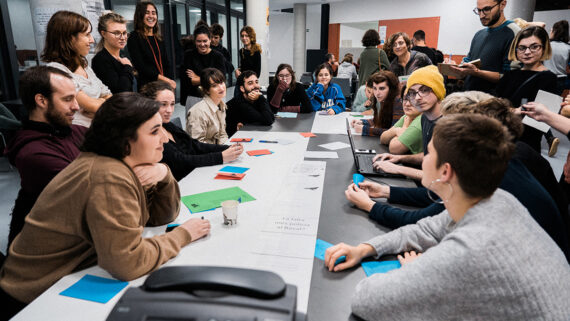
Beyond this first in-person session, the Pact foresees the creation of an organizational structure to guarantee ongoing citizen participation. An annual assembly will be established, along with several working committees on specific thematic areas (artificial intelligence, free software, digital rights, open data), and this digital governance space will remain available for continuous contribution.
The proposal acknowledges the consultative nature of the Pact, as established by the Barcelona City Council’s Citizen Participation Regulations, but the aim is for it to become a real space for comparison and co-creation among multiple social actors capable of influencing the city’s digital public policies.